



Do Rock Tamers mudflaps actually protect my trailer from rocks?
Rock Tamers mudflaps create a physical barrier between your truck’s rear tires and your towed cargo, stopping road debris before it reaches your trailer’s finish, lights, or hull.
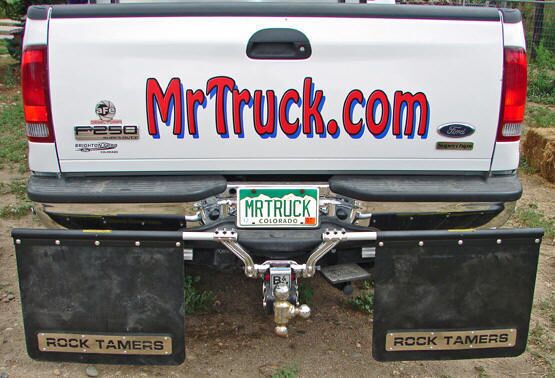
The system’s core is a pair of 3/8-inch thick rubber flaps with an anti-splash pattern engineered to deflect stones, gravel, and road grime downward and away — not backward into whatever you are towing. That extra thickness matters. Thinner alternatives flex on impact, allowing debris to ricochet unpredictably.
The anti-splash pattern breaks up the water and mud stream rather than letting it travel in a concentrated jet. In practice, this means less splatter reaching the lower panels, wheels, and tongue of your trailer.
Expert Tip: The hitch-mounted design positions the flaps directly behind the tires at their widest point — the exact zone where debris kickback is most concentrated and most damaging to trailing cargo.
For boat owners, RV travelers, and anyone hauling an enclosed trailer, that coverage translates directly into fewer paint chips, cleaner gelcoat, and reduced corrosion risk. Whether the protection justifies the cost compared to standard mud flaps is a question worth examining closely.
Are Rock Tamers worth the money compared to standard mud flaps?
Whether Rock Tamers protect trailers from rocks is the right question — the better one is whether a single rock strike on your trailer’s paint justifies the investment, and the answer is almost always yes.
Cost vs. repair value. A professional trailer paint repair can run several hundred dollars depending on the damage. The Rock Tamers mudflaps system costs a fraction of that upfront and can prevent repeated damage over years of towing. The math tends to favor protection quickly.
Buy once, use everywhere. Unlike wheel-well mounted flaps that are bolted permanently to one truck, the Rock Tamers system attaches to your hitch receiver. That means you can move it between vehicles — a practical advantage if you own or upgrade multiple trucks over time.
Coverage area matters. Standard wheel-well flaps protect only the area directly behind each tire. The Rock Tamers hitch-mounted design deploys heavy-duty 24″ x 24″ rubber flaps with tear-resistant fabric and stainless steel trim plates, spanning the full width of your truck’s rear — a significantly wider protection zone.
That full-width adjustability is exactly where the system’s engineering gets interesting.
How wide can the Rock Tamers system be adjusted?
The Rock Tamers system adjusts from a minimum of 67.75 inches to a maximum of 97.25 inches in width, making it compatible with trucks ranging from mid-size pickups all the way to wide-body dually configurations.
That adjustable width range matters more than most buyers realize. A standard half-ton truck and a dually have dramatically different rear-axle spans, and mud flap coverage that works for one will leave dangerous gaps on the other. With Rock Tamers, a single system covers both ends of that spectrum without requiring a separate purchase.
-
Mid-size and half-ton trucks: Typically operate closer to the minimum width setting
-
Three-quarter-ton and one-ton trucks: Generally need a wider configuration
-
Dually rear axles: Benefit most from the maximum extension to cover the outer tires fully
The hub-mounted design drives this flexibility. Rather than fixing the flaps at a static point, the adjustable crossbar slides and locks at your chosen width, keeping the flaps positioned precisely over your tire footprint. If you are still asking whether Rock Tamers are worth the money, this single-system versatility is a strong part of the answer — and how that system mounts to your truck is equally worth understanding.
Are hitch-mounted mud flaps better than frame-mounted ones?
Hitch-mounted mud flap systems offer a significant practical advantage over frame-mounted alternatives: you can install or remove the entire system in minutes without tools.
Installation and removal are where hitch-mounted designs genuinely shine. Frame-mounted flaps require drilling into your truck and creating permanent attachment points, which means you are committed regardless of whether you are towing. A hitch-mounted system slides into your receiver hitch and locks in place — that is the entire process.
Proximity to the trailer is another factor worth considering. Because the flaps deploy behind the truck’s rear axle, debris is deflected much closer to the source. Frame-mounted options positioned further forward can still allow rocks to ricochet toward a trailer at damaging angles. When comparing Rock Tamers vs. standard mud flaps, this positioning difference is often what determines whether a trailer’s front cap survives a gravel road.
Clean aesthetics matter to many owners. When you are not towing, removing a hitch-mounted system takes seconds, leaving your truck looking stock. Permanent frame flaps stay attached whether you want them or not. That said, frame-mounted flaps do eliminate any risk of forgetting to reinstall protection before a trip — a real-world caveat worth acknowledging.
Of course, proper vertical positioning of the flaps themselves is just as critical as which mounting style you choose.
How far off the ground should Rock Tamers be set?
Proper height adjustment for hitch-mounted mud flaps is one of the most critical setup decisions you will make — set them too low and they drag; set them too high and debris sails right underneath.
Too Low: When the flap bottom sits too close to the pavement, contact with the road surface causes premature wear, loud scraping noise, and potential damage to the mounting hardware. This tends to become a bigger problem on dips, inclines, and uneven pavement where ground clearance changes unpredictably.
Too High: Raising the flaps above the recommended height defeats their purpose. Rocks and road debris simply pass beneath the barrier, leaving your trailer vulnerable to the same impacts the system was designed to stop.
Recommended Clearance: Proper height adjustment is critical to prevent the flaps from dragging while maintaining a barrier against low-flying rocks. For standard highway towing, the general guideline is to position the bottom edge of the flap approximately 4 to 6 inches above the ground when the truck is loaded and at ride height. Check the clearance again after hitching your trailer, since tongue weight can lower the rear of the truck and shift the flap position.
And with height dialed in, the next variable worth examining is your receiver size — which determines which Rock Tamers model fits your setup.
Can I use Rock Tamers with a 2.5-inch or 3-inch hitch receiver?
Rock Tamers mudflap systems are purpose-built for multiple receiver sizes, including 2-inch, 2.5-inch, and 3-inch drawbars — so larger heavy-duty trucks are fully supported without improvisation.
If you tow with a three-quarter-ton or one-ton truck equipped with a larger receiver opening, compatibility is straightforward. According to the Rock Tamers product lineup, dedicated models exist for each receiver size, meaning the fit is engineered rather than forced. That distinction matters more than most owners initially realize.
Adapter risk is where many setups go wrong. Stacking a 2-inch shank into a 3-inch receiver via an adapter introduces play, vibration, and potential wobble — all of which affect how consistently the flaps hang and how much protection they actually deliver. Any Rock Tamers review will flag this: a properly sized system eliminates the slop that adapters create.
For buyers matching a system to their truck, check three things before ordering:
-
Receiver opening size (2″, 2.5″, or 3″)
-
Ball mount drop or rise needed to keep flaps at the correct height
-
Weight rating of the hitch class to confirm the system stays within spec





 Automatic Tire Balancers for Trucks and Trailers25% to 50% longer tire life,
  Automated Safety Hitch




 Popup Cushion Coupler Happy Horses Smooth Trailers